
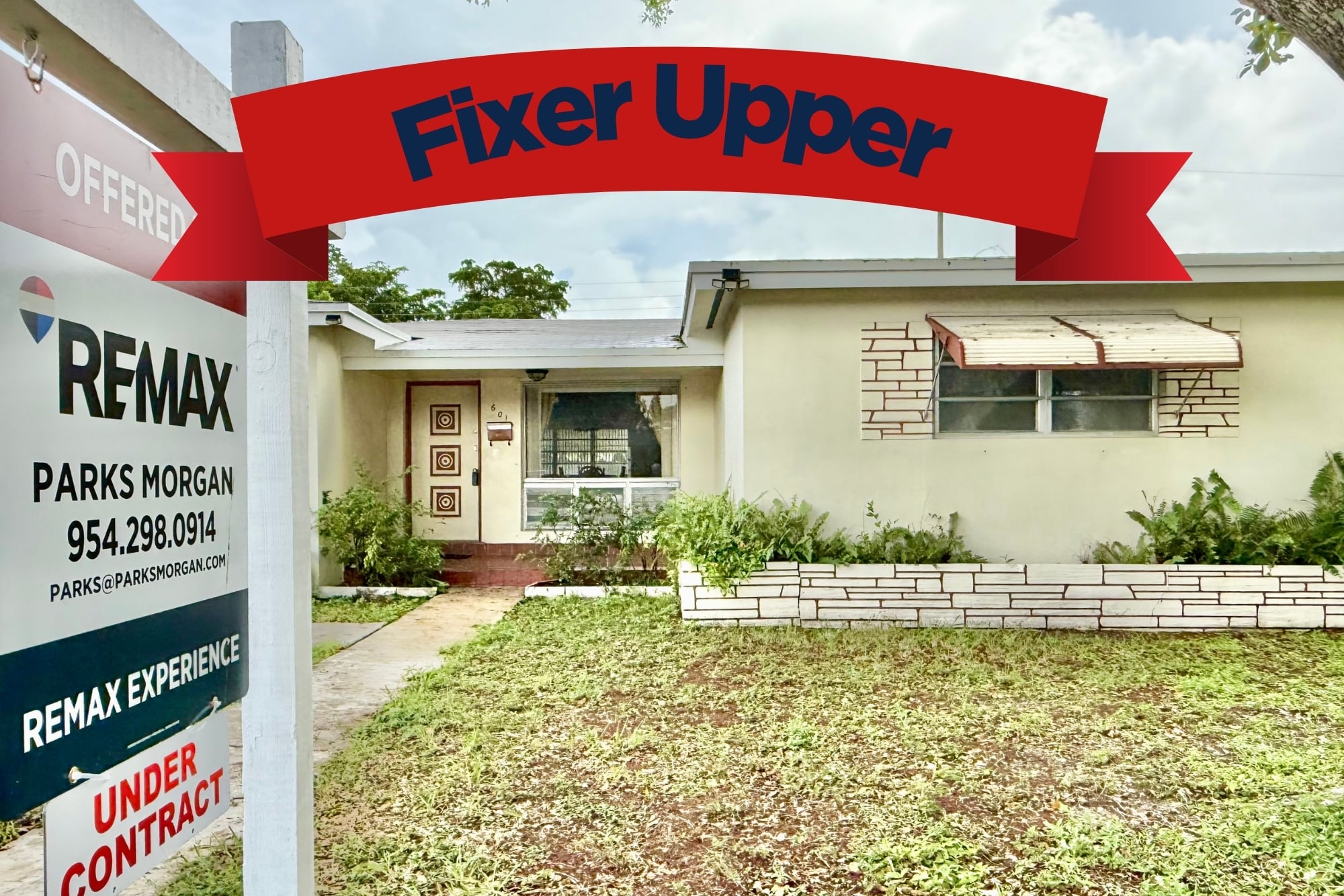
I've watched the same thing happen on listing after listing this year. A fully updated home goes on the market and it's gone in days, often for a price that's hundreds of thousands of dollars higher than the house two doors down. Meanwhile, that other house, the one with good bones, a solid roof, and a kitchen that hasn't been touched since the Clinton administration, sits. And sits.
Buyers keep asking me the same question: is it smarter to stretch for the updated home, or buy the dated one and fix it up myself?
In 2026, with mortgage rates still sitting in the mid 6% range and renovation costs higher than they've ever been, that's a real financial decision, not just a taste preference. So let's run the actual numbers.
The Premium Is Real, and I Can Prove It
Earlier this month I sold 3481 NE 18th Ave in Oakland Park for $1,150,000, which works out to $658 a square foot. That's the highest price per square foot the South Corals neighborhood has ever recorded for a non-waterfront home. The reason it commanded that number wasn't the lot or the location alone. It was that every finish, fixture, and system in that house had already been replaced. A 13-foot quartz waterfall island, a full Miele appliance suite, a resort-style pool and outdoor kitchen. Buyers didn't have to imagine what it could look like. They just had to write the check.
That's the pattern I'm seeing across Fort Lauderdale, Wilton Manors, and Oakland Park right now. Homes that are fully remodeled, not lightly updated, are pulling premiums that a fresh coat of paint and new countertops can't touch. I wrote about this shift in more detail in It's Not One Real Estate Market, and the trend has only gotten more pronounced since.
Nationally, the gap between a move-in ready home and one that needs work runs somewhere around 7 to 8 percent, according to recent Zillow research. In parts of Fort Lauderdale, Wilton Manors, and Oakland Park, I'm seeing that gap stretch into six figures on comparable homes on the same block. That's not a typo. That's what happens when a market gets this specific about what buyers will and won't pay a premium for.
Homes in Good Condition Are Still Moving Fast
Here's the part that surprises people. It's not that dated homes can't sell. It's that the market has gotten faster and pickier at the same time. Based on our local BeachesMLS data for July 2026, single-family homes across all three cities are going under contract noticeably quicker than they were a year ago.
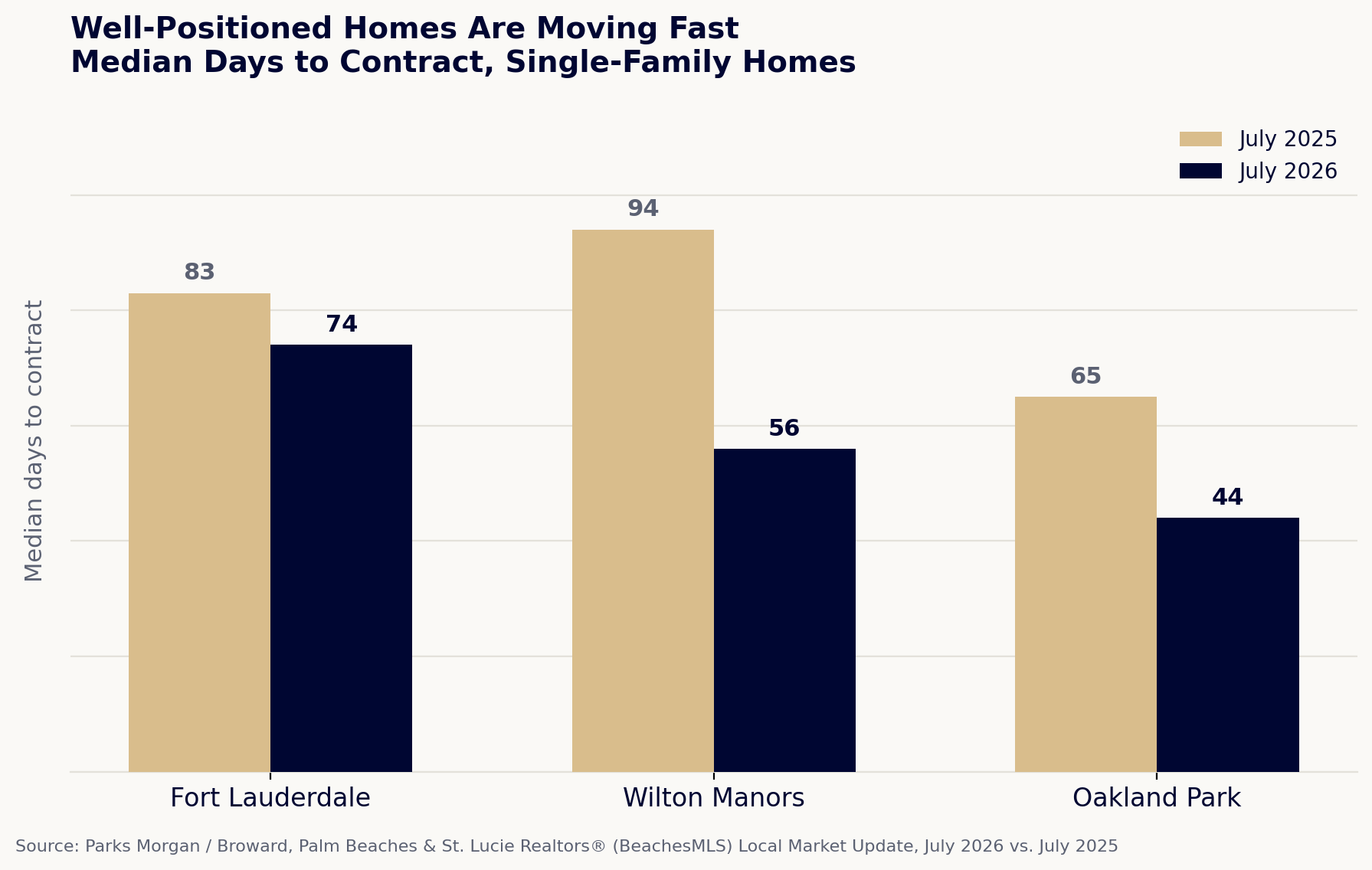
Fort Lauderdale homes are contracting in a median of 74 days, down from 83. Wilton Manors dropped from 94 days to 56. Oakland Park is the fastest of the three at just 44 days, down from 65. Inventory is tight everywhere, months of supply fell by roughly a third across the board. That's a market that rewards a home priced right for its condition and punishes one that isn't.
The takeaway: a dated home that's priced honestly for its condition will still move. It just won't compete for the same buyer pool, or the same price, as the fully remodeled listing next door. That gap is exactly where the opportunity lives.
What Renovation Actually Costs in 2026
This is the part buyers underestimate the most. Renovation costs have climbed steadily over the past few years, driven by skilled labor shortages and material costs, and South Florida runs toward the higher end of national ranges because of hurricane-code windows, updated permitting requirements, and strong demand for contractors.
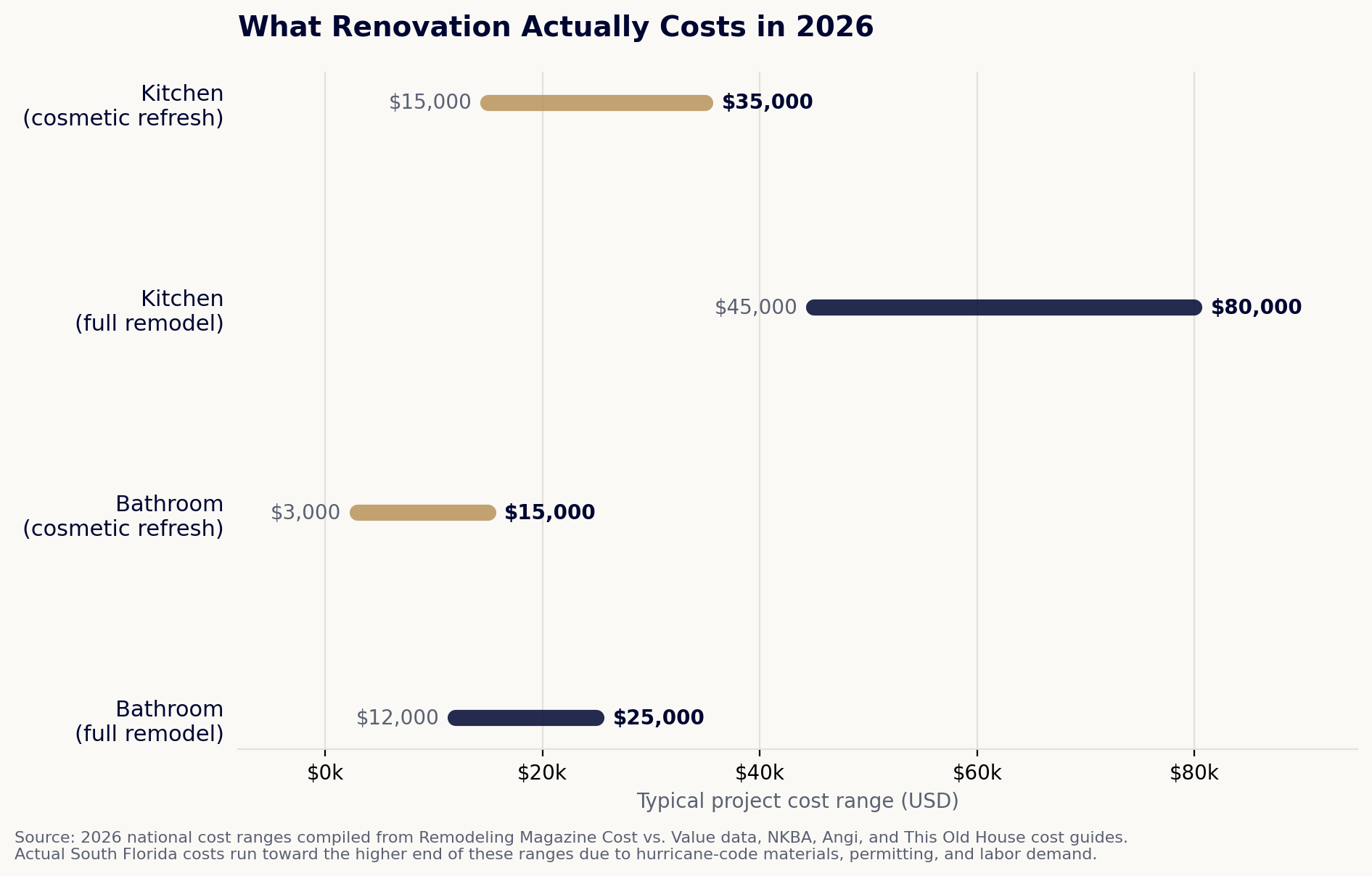
Here's what the 2026 data actually shows for typical projects:
- Kitchen, cosmetic refresh (new countertops, cabinet fronts, hardware, lighting): roughly $15,000 to $35,000
- Kitchen, full remodel (new layout, cabinetry, appliances): roughly $45,000 to $80,000
- Bathroom, cosmetic refresh (vanity, fixtures, paint, re-tile): roughly $3,000 to $15,000
- Bathroom, full remodel (new plumbing, shower, tile, finishes): roughly $12,000 to $25,000
A minor kitchen refresh is still one of the best-returning projects a homeowner can make, recouping a large share of its cost at resale according to the most recent Cost vs. Value data. Big, structural kitchen overhauls recoup less, closer to 40 to 80 percent, which matters if you're thinking about resale within a few years rather than living in the home long term.
One more thing worth building into your budget from day one: a 20 percent contingency. Between permitting delays, older homes revealing surprises once walls come down, and material costs that can shift mid-project, that cushion isn't optional in this market. It's the difference between a renovation that stays on budget and one that blows past it.
Running the Real Math
Let's put actual numbers next to this instead of talking in generalities. Say you're looking in a pocket of Fort Lauderdale where fully updated homes are trading around $750,000, and a comparable home two blocks over, needing cosmetic and some functional updates, is priced at $600,000. That $150,000 gap is consistent with what we're seeing block to block right now.
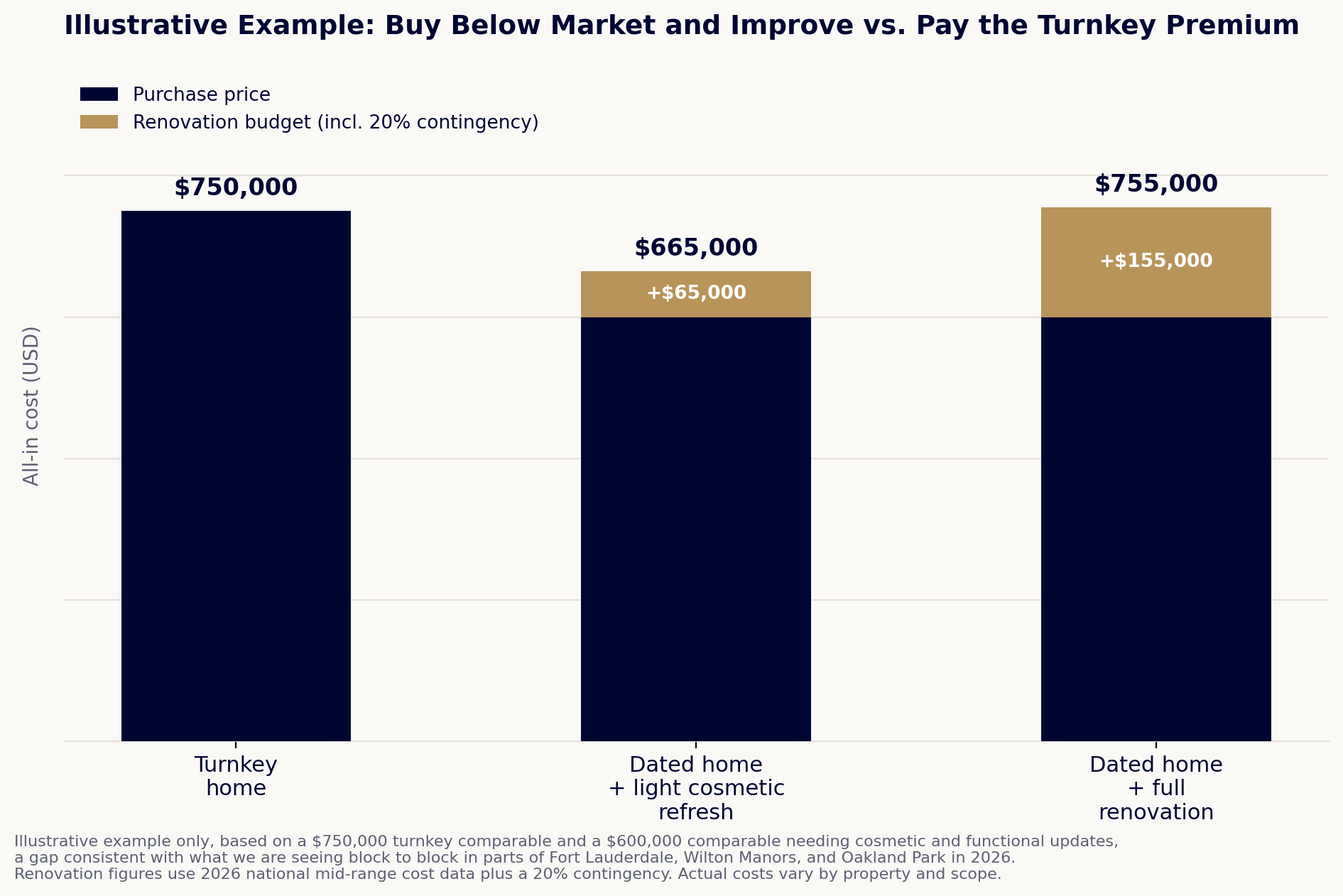
Path one: light cosmetic refresh. New countertops, refreshed cabinets, updated fixtures, paint, and flooring throughout. Budgeted at roughly $65,000 including a 20 percent contingency, your all-in cost lands around $665,000. That's $85,000 below the turnkey comparable, and you're living in the home almost immediately.
Path two: full renovation. Gut the kitchen, redo both bathrooms, replace flooring throughout, refresh the exterior. Budgeted at roughly $155,000 including contingency, your all-in cost comes to about $755,000, close to the turnkey price. The difference here isn't savings on paper. It's that every finish in the house is one you chose, rather than one baked into someone else's flip.
Here's a number that doesn't get talked about enough: financing. At today's rate of roughly 6.65 percent on a 30-year fixed, with 20 percent down, the buyer taking the light-refresh path is financing a monthly principal and interest payment of about $3,415. The turnkey buyer is financing about $3,852. That's over $400 a month in breathing room, money that can go straight back into finishing the rest of the house on your own timeline, on your own terms.
When This Strategy Makes Sense, and When It Doesn't
I'm not going to tell you a fixer is always the right move. It isn't. Here's how I'd think through it with a client:
It makes sense when:
- You have renovation money that's genuinely separate from your down payment and your emergency fund, plus that contingency buffer
- You can tolerate months of contractors in and out, or you're doing the work in phases while living in part of the house
- You're planning to stay long enough to enjoy the improvements, not flip in a year or two
- You have a contractor relationship you trust, or the patience to vet one properly
It's probably not the right move when:
- The gap between the dated home and the updated comparable is small, under $50,000 or so, once you account for renovation costs, the math often doesn't favor the extra time and disruption
- You need to be in the home immediately with no flexibility for delays
- The home needs structural, roof, or systems work rather than cosmetic updates. That's a different budget conversation entirely
- You'd be over-improving for the block. A $150,000 kitchen in a neighborhood of $500,000 homes rarely pays you back
Where I'm Seeing This Play Out
Right now, across Fort Lauderdale, Wilton Manors, and Oakland Park, the widest opportunities are showing up in neighborhoods where remodeled homes have already set a new price ceiling but original-condition homes haven't caught up to it yet. That's a moving target. It shifts block by block and month by month, which is exactly why a countywide average doesn't tell you much about your specific street.
I've been a licensed Florida Realtor since 2003, working this exact corridor the entire time. If you're weighing a dated home against a turnkey one, I can walk the comps with you street by street, tell you honestly whether the gap justifies the project, and connect you with contractors I trust if it does. Reach out and let's look at your specific options.
Frequently Asked Questions and Answers
Is it cheaper to buy a fixer-upper and renovate than to buy a move-in ready home in Fort Lauderdale? It depends on the size of the price gap. In parts of Fort Lauderdale, Wilton Manors, and Oakland Park, updated homes are commanding six-figure premiums over comparable dated homes on the same block. When that gap is large, a light cosmetic renovation (roughly $65,000 to $85,000 for kitchen and bathrooms) can still land well below the turnkey price. When the gap is small, under about $50,000, the math often favors buying the updated home outright.
How much does a kitchen remodel cost in 2026? A cosmetic kitchen refresh, new countertops, cabinet fronts, hardware, and lighting, typically costs $15,000 to $35,000. A full kitchen remodel with a new layout, cabinetry, and appliances typically costs $45,000 to $80,000. South Florida costs tend to run toward the higher end of these ranges due to hurricane-code materials and permitting.
How much does a bathroom remodel cost in 2026? A cosmetic bathroom refresh (vanity, fixtures, paint, re-tile) typically costs $3,000 to $15,000. A full bathroom remodel with new plumbing, shower, and tile typically costs $12,000 to $25,000.
What is the current home price gap between updated and dated homes in Fort Lauderdale? Nationally, Zillow Research has found move-in ready homes sell for roughly 3.7 percent above expected value while homes marketed as needing work sell for roughly 7.3 percent below, a combined gap of around 7 to 8 percent. In specific pockets of Fort Lauderdale, Wilton Manors, and Oakland Park, agent Parks Morgan reports that gap running into six figures on comparable homes on the same block.
How fast are homes selling in Fort Lauderdale, Wilton Manors, and Oakland Park right now? As of July 2026, single-family homes in Fort Lauderdale went under contract in a median of 74 days, Wilton Manors in 56 days, and Oakland Park in 44 days, all faster than a year earlier, according to BeachesMLS Local Market Update data.
Should I always buy the cheaper, dated home and renovate instead of paying for a move-in ready home? No. It makes the most financial sense when the price gap is large enough to absorb renovation costs plus a contingency, the buyer has renovation funds separate from their down payment and emergency savings, and the work needed is cosmetic rather than structural. It's usually not worth it when the gap is small, the timeline requires an immediate move, or the home needs major structural, roof, or systems work.
Sources: Parks Morgan / Broward, Palm Beaches & St. Lucie Realtors® (BeachesMLS) Local Market Update, July 2026 vs. July 2025. National renovation cost ranges compiled from Remodeling Magazine Cost vs. Value data, the National Kitchen & Bath Association, Angi, and This Old House 2026 cost guides. National move-in ready premium data from Zillow Research. Mortgage rate figures reflect national 30-year fixed averages as of late August 2026 and will vary by lender and borrower profile.
This article is for general informational purposes and does not constitute financial or investment advice. Renovation costs and timelines vary significantly by property and scope. Talk to a licensed contractor for project-specific quotes and a lender for current, personalized rate and payment figures.
Check out this article next