
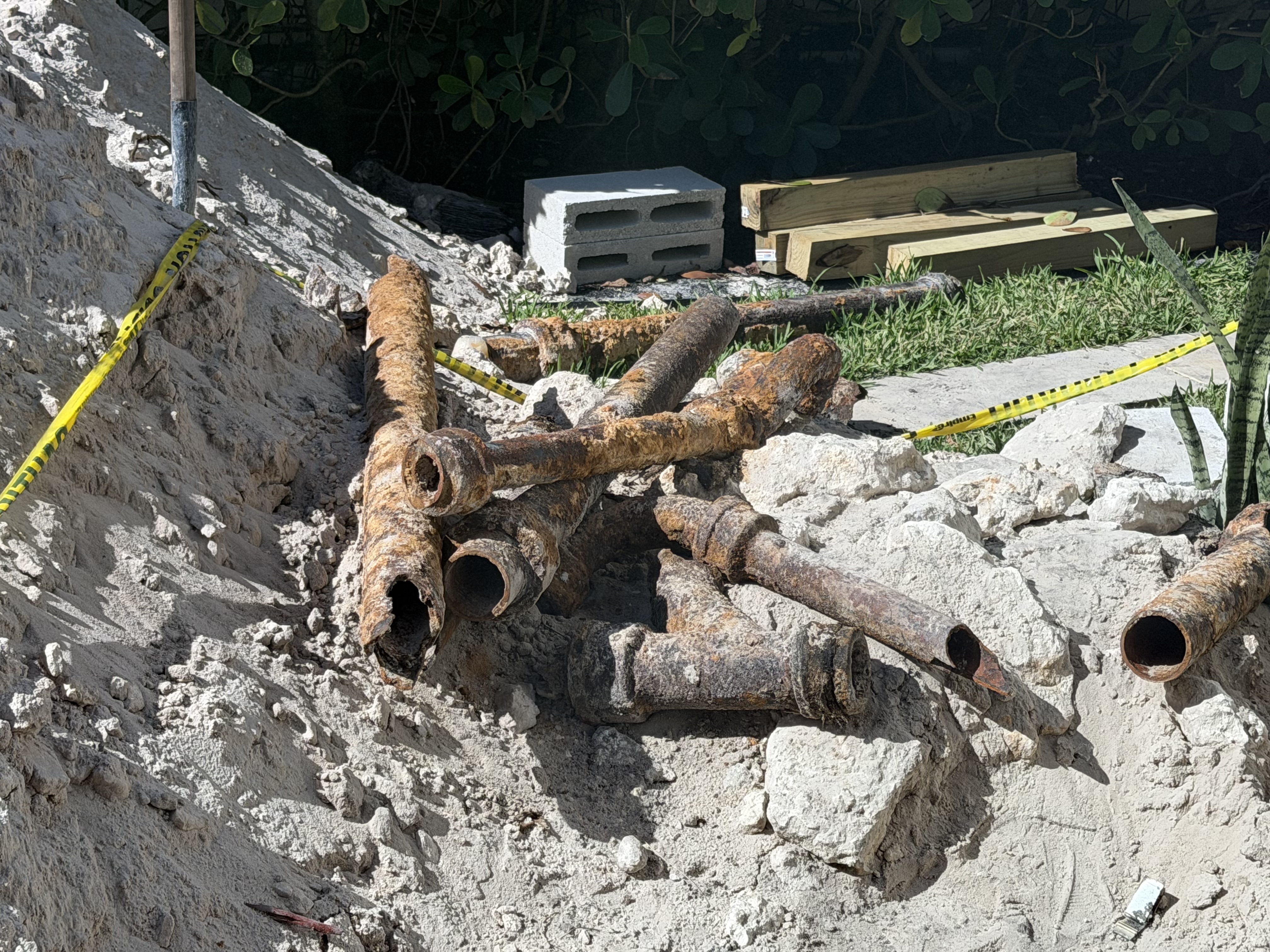
If you own or are buying a home built before the 1980s in Fort Lauderdale, Wilton Manors, or Oakland Park, there's a good chance the plumbing underneath it is cast iron. Most of the time it works fine for decades. Then one day it doesn't, and the repair shows up as a sinkhole in the yard or a stain spreading across the ceiling.
I recently watched this play out on a home I sold. The original cast iron drain lines had corroded from the inside out, and the repipe crew pulled up sections of pipe that had rusted down to almost nothing. What looked like solid iron on the outside was hollow and crumbling on the inside. It's a good reminder of why this topic matters for anyone buying or selling an older South Florida property.
What Are Cast Iron Pipes and Why Are They So Common Here?
Cast iron pipe was the standard for drain, waste, and vent (DWV) lines in homes built from roughly the 1900s through the early 1980s. It's durable, it's quiet, and it does a good job of muffling the sound of water moving through walls. Builders across Broward County used it heavily during the postwar housing boom, which is exactly the era that shaped neighborhoods like Wilton Manors, Oakland Park, and the older sections of Fort Lauderdale.
The problem isn't the material itself. It's the clock. Cast iron pipe typically lasts 50 to 75 years, and a lot of South Florida's housing stock is now sitting right in that window or past it.
How Do You Know If a Home Has Cast Iron Plumbing?
A few quick ways to check:
- The home was built before 1980
- Exposed pipes in the garage, crawlspace, or under a sink are dark gray or black metal with visible seams
- A magnet sticks to the visible pipe (cast iron is magnetic, PVC and copper are not)
- The seller's disclosure or permit history mentions original plumbing
If none of that is conclusive, a licensed plumber can run a camera scope through the main line in under an hour and tell you exactly what's down there.
What Are the Warning Signs of Cast Iron Pipe Failure?
Cast iron doesn't usually fail all at once. It fails slowly, then all at once. Watch for:
- Slow drains that don't respond to normal cleaning
- Gurgling sounds from toilets or tubs when other fixtures run
- A sulfur or sewage smell near drains or in the yard
- Damp spots, soft soil, or unusually green grass along a drain line's path
Any one of these on its own might be nothing. Two or three together are worth a professional look before they turn into the kind of excavation shown in a repipe job.
Why Do Cast Iron Pipes Fail Faster in South Florida?
Our environment isn't gentle on old iron. The combination of high water tables, sandy and limestone soil, and consistent humidity accelerates corrosion from both the inside and the outside of the pipe. Add in decades of harsh drain cleaners, and the interior walls of the pipe thin out until they're paper thin, exactly like the sections pulled from the ground in that recent job. Once a pipe corrodes through, water and waste start moving into the soil around the foundation instead of through the line, which is when you start seeing settling, odors, and yard damage.
What Does Repiping Cost and How Long Does It Take?
Costs vary widely based on the home's size, whether the work is done under a slab or through accessible crawlspace, and how much of the system needs replacing. A full drain line replacement on a single family home in this area commonly runs into five figures, and a full repipe including supply lines can go higher. Timelines usually range from a few days for partial repairs to two to three weeks for a full underneath the slab tunneling, pipe replaced, and the landscaping replaced.
This is exactly the kind of number a buyer wants clarity on before closing, not after.
Does Cast Iron Plumbing Affect a Home's Value or Insurability?
It can affect both. Some insurers in Florida now ask directly about the age and material of plumbing during underwriting, and older cast iron systems can lead to higher premiums or added scrutiny. On the value side, a documented cast iron issue can become a negotiating point, whether that means a price adjustment, a seller credit, or a pre-closing repipe or lining of existing pipes. None of that has to be a deal breaker. It just needs to be known and priced in rather than discovered later.
Should Buyers Get a Sewer Scope Before Closing?
For any home built before 1980 in this market, yes. A sewer scope inspection costs a few hundred dollars and gives a direct look at the condition of the main line. Compared to the cost of an emergency repipe after closing, it's one of the more affordable inspections a buyer can order. Sellers benefit too. Getting ahead of the issue with your own inspection means no surprises show up during the buyer's due diligence period.
Frequently Asked Questions
Is cast iron pipe dangerous? Not inherently. The risk comes from corrosion over time, which can lead to leaks, sewage backups, and soil erosion around a foundation. A functioning cast iron system isn't a hazard on its own.
Can cast iron pipes be repaired instead of replaced? Sometimes. Trench-less pipe lining can rehabilitate the system without excavation, but it depends on the extent of the damage and the layout of the system. A plumber's camera inspection will determine if lining is an option or if full replacement is needed.
How much does a sewer scope inspection cost? Typically a few hundred dollars in South Florida, which is a small price compared to discovering a collapsed line after closing.
Do all older Fort Lauderdale area homes have cast iron plumbing? Not all, but it's common enough in homes built before 1980 that it's worth checking rather than assuming either way.
The Bottom Line
Cast iron pipe isn't a reason to walk away from an older South Florida home, and it isn't something to ignore either. It's a maintenance item with a known lifespan, and the homes in Wilton Manors, Oakland Park, and Fort Lauderdale that get ahead of it tend to avoid the kind of surprise excavation that ends up in someone's front yard.
If you're buying or selling an older home in this area and want to talk through what to look for, I'm happy to help you think it through before it becomes a bigger project than it needs to be.
Check out this article next